
Summaries, examples, and (open access) links to some of our scientific work.
Consensus Management: Social and analytic opportunities in organizations
Table of Content and Introduction
Pairing mean scores with consensus metrics
Abstract: Managers often rely on survey or assessment data, using mean scores to guide decision-making. However, mean scores alone do not reflect the underlying level of agreement among people whose scores were used to calculate that mean. Specifically, groups may have heterogeneous attitudes and beliefs, forming sub-group orientations that differ quantitatively and may even conflict. Since mean scores do not capture this variability, relying solely on mean scores can result in poor choices. We therefore propose an extension to the existing approach: pairing mean scores with within-group consensus information to gain a more nuanced understanding of group attitudes and beliefs. In this Perspective Article, we discuss the improvement of coupling means scores with within-group consensus information, demonstrate the need for it to make better management decisions, and elaborate on the advantages and limitations. We believe our extension enables managers (and scholars) to answer new questions and revisit existing ones.
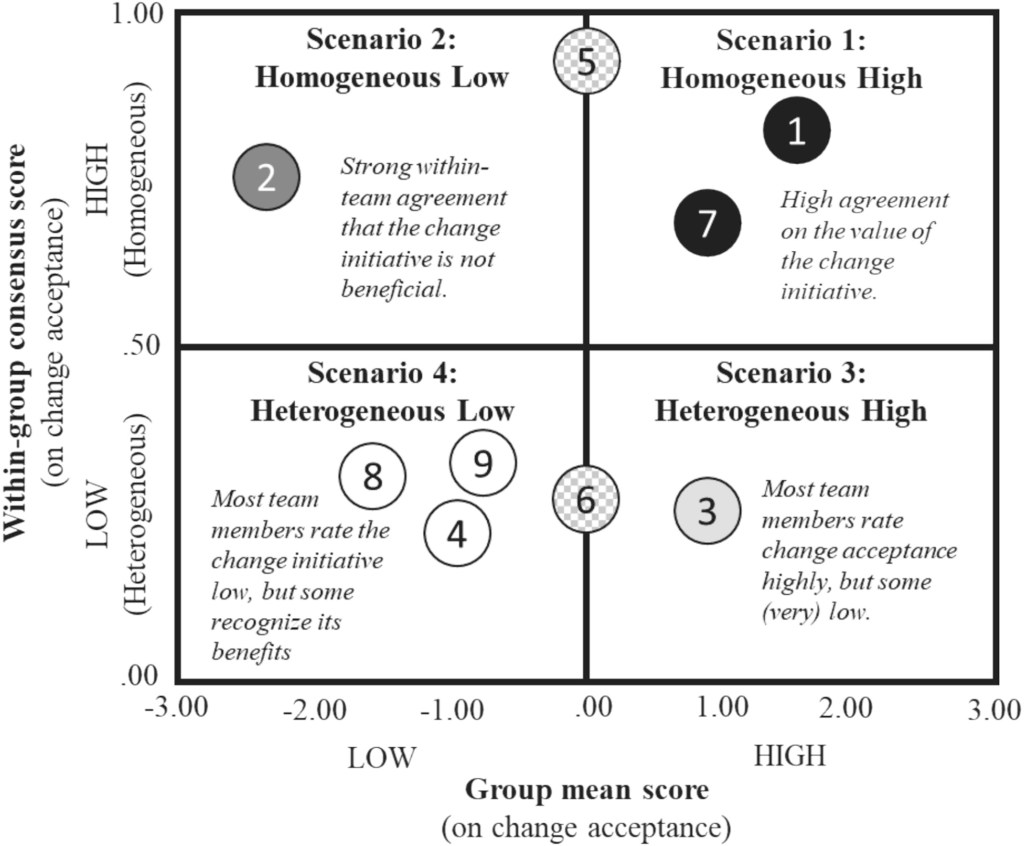
Meyfroodt, K. & Willems, J. (2025). Pairing Mean Scores with Consensus Metrics: Extending managers’ toolkit for decision-making. European Management Review.
DOI:10.1111/emre.70020 (Open Access)
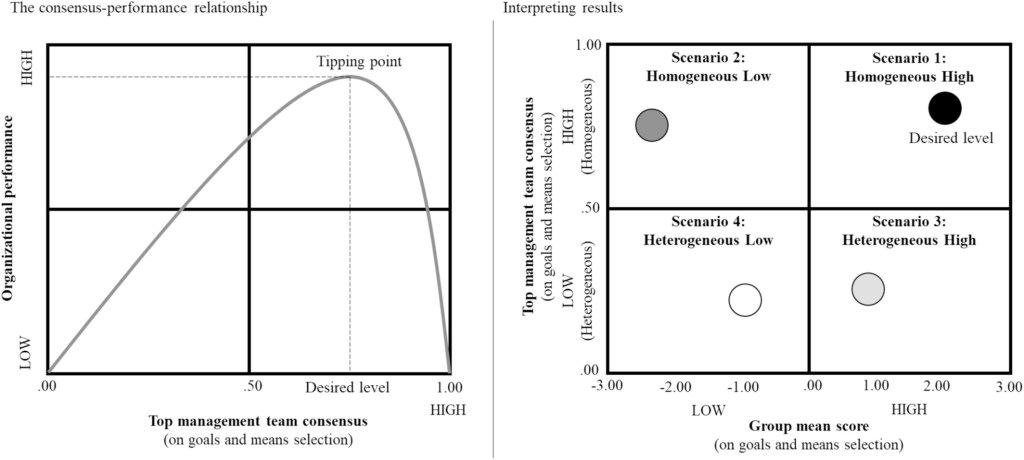
Mapping and plotting within- and between-group consensus in leadership teams — Two sibling articles
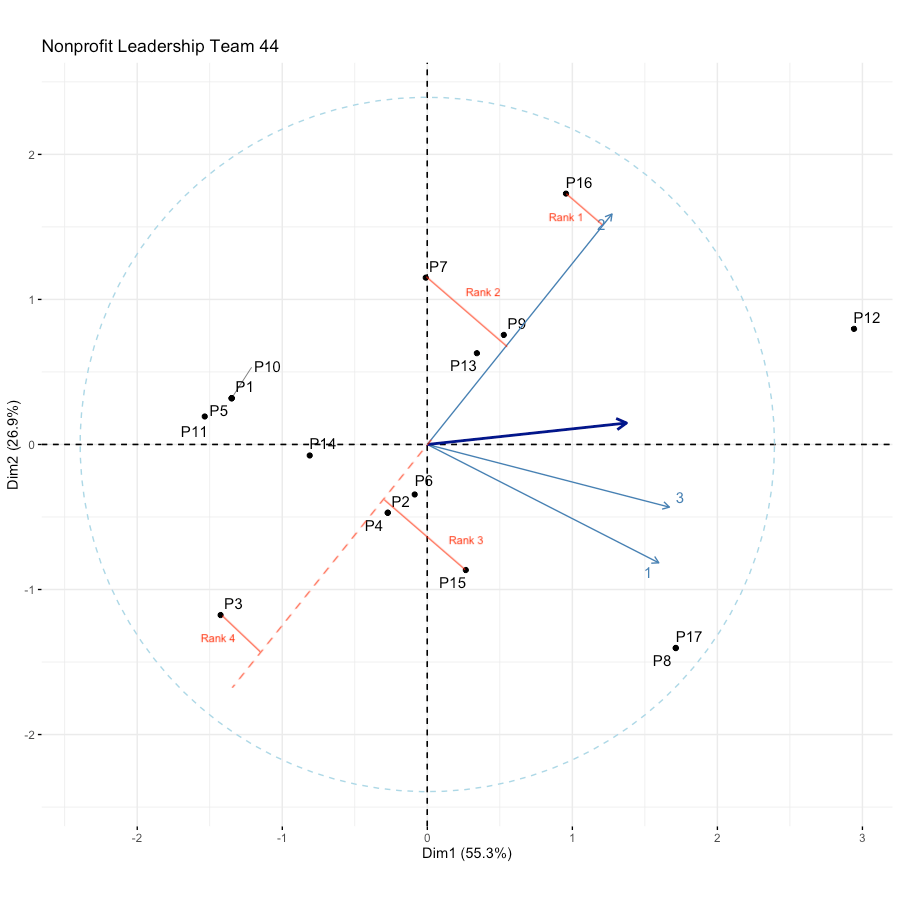
Meyfroodt, K., Willems, J., & Ozkes, A.I. (2025). Within-Group Consensus in Nonprofit Leadership Teams: Two Approaches for Analyzing and Visualizing Within-Group Consensus. Nonprofit Management & Leadership, 36(2), 271-287.
DOI:10.1002/nml.70004 (Open Access)
Meyfroodt, K., Ozkes, A.I., Willems, J. (2025). Beyond within-group consensus: Theoretical and methodological extensions for analyzing and visualizing between-group consensus across nonprofit leadership teams. Nonprofit Management & Leadership, 36(2), 289-298.
DOI:10.1002/nml.70001 (Open Access)
Read the executive summary here.
Group research: Why are we throwing away the best of our observations?
Summary: We start from the observation that agreement metrics are mainly used in group and organization research for methodological reasons only. Therefore, we think there are many missed opportunities to study within-group agreement and consensus as core theoretical concepts in group and organization management. We muse in this article about opportunities to rely on agreement metrics for centerpiece research questions, beyond mere methodological argumentations about data selection and technical model specifications. We structure our considerations in three guiding questions for scholars who are interested in multi-level group and organization research. To initiate a good and constructive scientific debate on this – and thus deliver what is expected from a GOMusing article – we hope for a fair amount of disagreement, but not too much, in the group and organization research community.
Willems, J. & Meyfroodt, K. (2024). Group Research: Why are we Throwing Away the Best of our Observations? Group & Organization Management.
DOI:10.1177/10596011241246303 (Open Access)

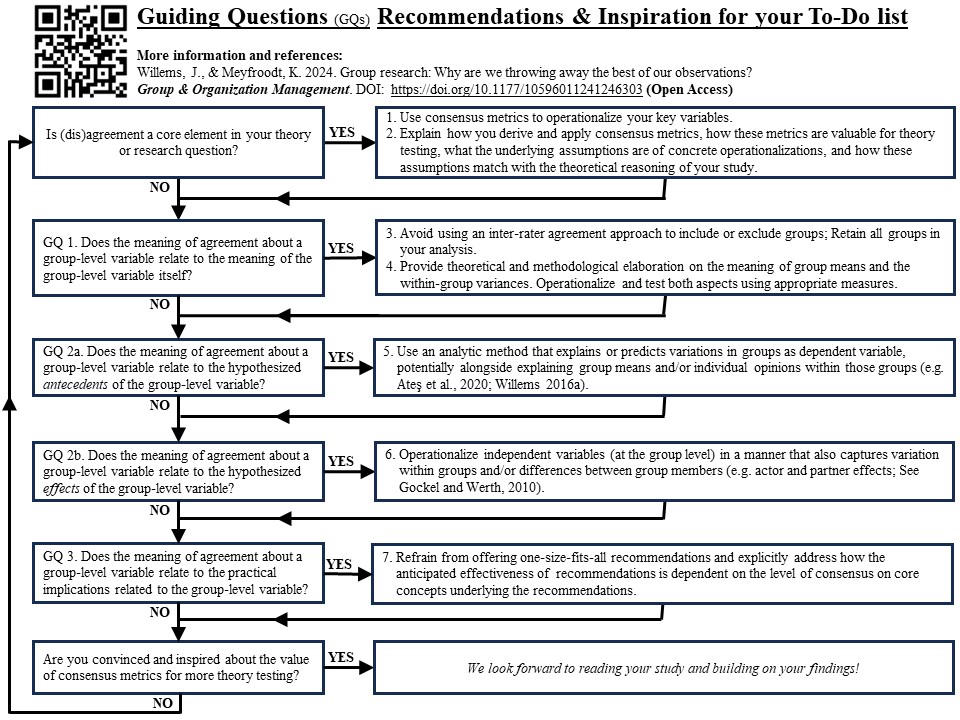
Read the SAGE – BUSINESS AND MANAGEMENT INK blog post here
Doing Good and Doing Well? CSR Climate as a Driver of Team Empowerment and Team Performance
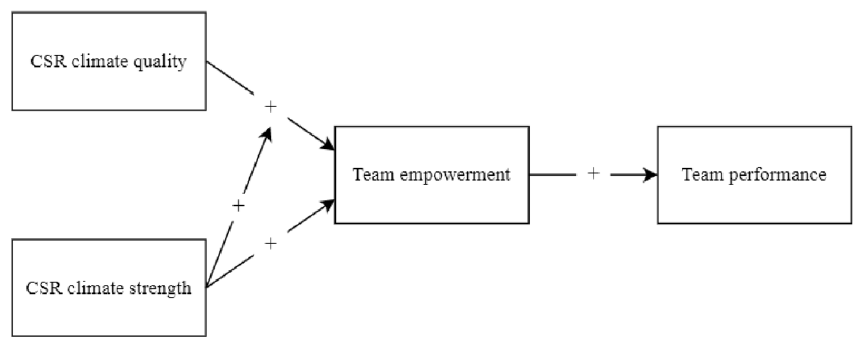
Summary: This study examines how employees’ shared perceptions of their organization’s corporate social responsibility (CSR) efforts—referred to as CSR climate—shape team empowerment and, ultimately, team performance. Using multisource data from 537 employees across 73 retail teams in Flanders, the research distinguishes between two components of CSR climate:
- CSR climate quality: the perceived presence and visibility of CSR initiatives.
- CSR climate strength: the degree of within‑team consensus regarding the authenticity of these initiatives.
Grounded in signaling and attribution theory, the study shows that both CSR climate quality and CSR climate strength significantly enhance team empowerment, which in turn drives stronger team performance. Notably, CSR climate strength—shared beliefs about the authenticity of CSR—is the more powerful predictor, highlighting that teams respond most positively when CSR efforts are seen as genuine rather than symbolic. While CSR climate strength did not moderate the relationship between climate quality and empowerment as hypothesized, the findings underscore a central message: Authentic, collectively recognized CSR initiatives play a critical role in fostering empowered, high‑performing teams. These insights encourage organizations to move beyond implementing CSR activities toward communicating their true purpose and authenticity, ensuring employees experience CSR as a meaningful and shared commitment.
Managerial implications:
Invest in authentic CSR
Teams respond strongly when CSR initiatives are perceived as genuine.
Communicate purpose clearly
Explain why CSR initiatives exist to strengthen employees’ shared understanding and trust.
Foster shared perceptions of CSR
Encourage dialogue and transparency so teams develop consensus about the authenticity of CSR actions.
CSR can build empowerment
Understood and credible CSR initiatives enhance team motivation, autonomy, and confidence.
Support team performance through CSR climate
A strong CSR climate indirectly boosts performance by empowering teams to take initiative and coordinate more effectively.
Kluijtmans, T., Meyfroodt, K., & Crucke, S. (2024). Doing good and doing well? CSR climate as a driver of team empowerment and team performance. Journal of Business Ethics, 195(3), 599-614.
DOI:10.1007/s10551-024-05678-z
All aboard? How Line-of-Sight impacts the strategic commitment of nonprofit employees.
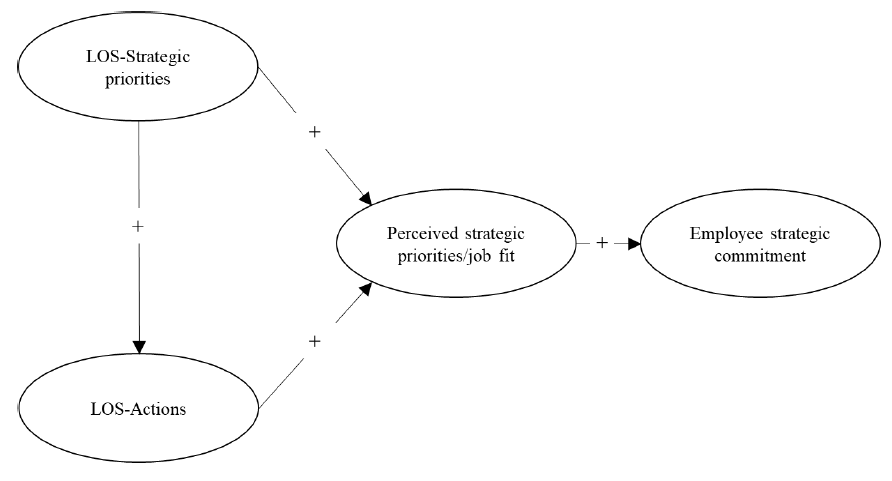
Abstract: Line-of-Sight refers to an employee’s (a) awareness and perceived importance of the organization’s strategic priorities, (b) accurate understanding of how job tasks and roles contribute to the realization of these strategic priorities, and (c) perceived fit between these strategic priorities and his or her job. Line-of-Sight is assumed crucial for enhancing employee strategic commitment as a more accurate understanding of the strategic priorities can enhance employees’ satisfaction with the strategic priorities, leading them to rate the overall quality of these priorities highly and commit to ensuring proper implementation. However, empirical evidence is scarce, making it hard to provide evidence-based recommendations. Therefore, we explore primary survey data from 128 frontline employees and the general director of a human service nonprofit organization to arrive at a set of crucial recommendations for nonprofit managers. Moreover, by shedding light on the motivational mechanism, drivers, and benefits of Line-of-Sight we hope to have paved the way and call for more research on Line-of-Sight. Our findings suggest that (a) Line-of-Sight’s components matter for employees’ strategic commitment, (b) information, training, and team leaders’ visionary leadership are key to enhancing Line-of-Sight, but (c) not all employees may have similar levels of Line-of-Sight, necessitating targeted alignment efforts across the organization.
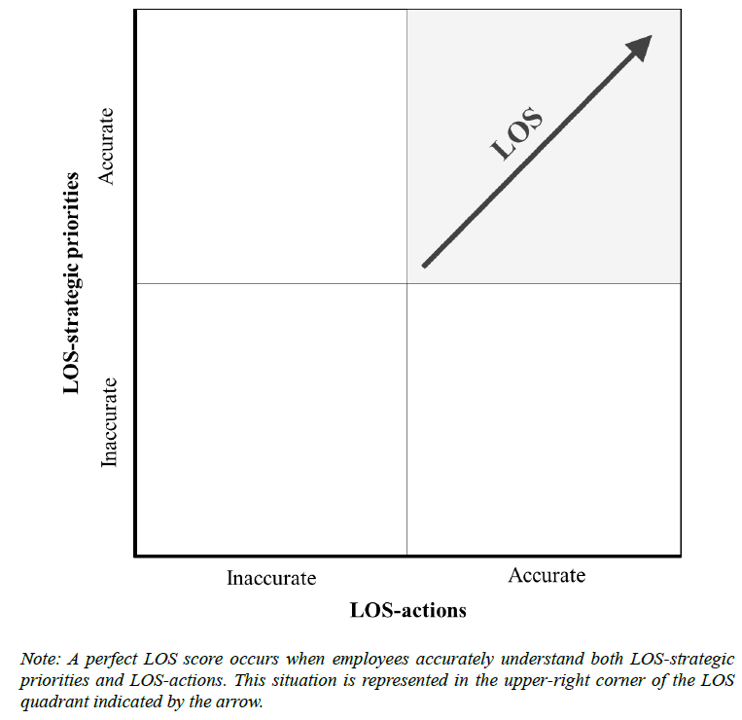
Meyfroodt, K., & Desmidt, S. (2024). All aboard? How Line-of-Sight impacts the strategic commitment of nonprofit employees. Public Management & Governance Review, 1(1), 1-22.
DOI:10.60733/PMGR.2024.02 (Open Access)
Do Politicians See Eye to Eye? The Relationship between Political Group Characteristics, Perceived Strategic Plan Quality, and Strategic Consensus in Local Governing majorities
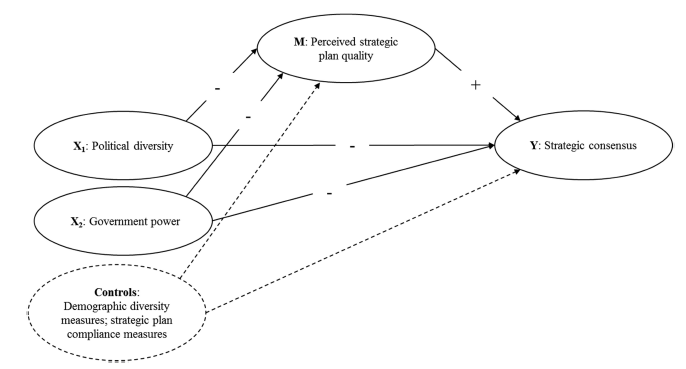
Abstract: Although strategic consensus is a core concept in strategic management research, empirical evidence is lacking on (1) the degree of strategic consensus in public organizations, (2) how strategic consensus is impacted by group characteristics specific to public strategic decision-making groups, and (3) how strategic plans impact these relationships. An analysis of multisource data from 1,075 governing majority members nested in 256 Flemish municipalities (Belgium) indicates that within-group strategic consensus varies among governing majorities and is negatively impacted by political diversity and political power, but these relationships are mediated by perceived strategic plan quality. The results indicate that the idiosyncrasies of public decision-making groups can impede high levels of strategic consensus, but strategic plans can attenuate this effect by fulfilling a boundary-spanning role.
Meyfroodt, K., Desmidt, S., & Goeminne, S. (2019). Do politicians see eye to eye? The relationship between political group characteristics, perceived strategic plan quality, and strategic consensus in local governing majorities. Public Administration Review, 79(5), 749-759.
Practitioner points:
Do not assume that formal approval equals shared support.
Even when a strategic plan is unanimously ratified, governing coalitions may still lack a shared understanding of its priorities.
Account for political diversity when designing planning processes.
Coalitions with many parties or large ideological distances face lower consensus and lower perceived plan quality. Tailor strategic discussions and communication to address divergent value frames.
Be attentive to power dynamics.
More powerful majorities are more comfortable expressing divergent views, resulting in lower strategic consensus.
Invest in creating high‑quality strategic plans.
Perceived plan quality strongly boosts strategic consensus and can offset negative effects of political diversity and power asymmetries. High‑quality plans serve as effective boundary‑spanning tools for bridging divergent perspectives.
Use strategic plans as practical boundary objects.
Plans contribute to shared understanding only when they are perceived as relevant, useful, and reflective of core priorities.
Strategic planning in public organizations is not purely rational.
Political motives and ideological differences persist throughout planning and approval.
Further reading – debate article:
Desmidt, S., & Meyfroodt, K. (2018). Debate: Unravelling strategic planning effectiveness—what about strategic consensus?. Public Money & Management, 38(4), 255-256.
DOI: 10.1080/09540962.2018.1449456
Shared strategic cognition in Flemish city councils: the relevance of political and demographic group characteristics
Summary: This research examines how well elected politicians within Flemish city councils share a common understanding of their municipality’s strategic priorities. Strategic consensus—also called shared strategic cognition—is essential for coherent decision-making and effective strategy implementation. Yet city councils are politically diverse environments, which can make this shared understanding difficult to achieve. Our study shows that political diversity—especially the number of political parties and the division between majority and minority groups—has a strong impact on shared strategic cognition (stronger than demographic differences such as age, gender, or tenure). This finding challenges the idea that “diversity automatically enriches strategic discussions” and shows that, in political settings, ideological and role-based differences matter.
Key findings:
- City councils differ significantly in how strongly members agree on strategic priorities.
- Political diversity (number of parties, ideological variation, and majority–minority roles) strongly reduces shared strategic cognition.
- Traditional demographic diversity (age, gender, education) has little explanatory power compared to political characteristics.
- Within majority and minority groups, political diversity continues to matter, especially in minority groups.
Desmidt, S., Meyfroodt, K., & George, B. (2019). Shared strategic cognition in Flemish city councils: the relevance of political and demographic group characteristics. Public Management Review, 21(7), 945-967.
Building shared mental models of organizational effectiveness in leadership teams
Abstract: Because shared mental models are critical for consistent, accurate decision making, this study seeks to explain the extent to which mental models are shared on the basis of team cognition theory and social constructionism. This study thus provides new insights into how the social dynamics among nonprofit leaders can explain mental models on nonprofit effectiveness. Specifically, team member exchange (TMX) quality should relate to agreement within leadership teams. Building on recent multilevel team research, this study regards the relationship theoretically as a separate actor and partner effect, which better reveals the underlying social processes. A multilevel data sample of 402 leaders from 44 nonprofit organizations provides support for the hypotheses, offering insights into the multilevel, emergent nature of team behavior and shared mental models. Practical recommendations focus on the central role of CEOs and board chairs, and on the need for a stronger consensus assessment in nonprofit performance evaluations.


Willems, J. 2016. Building shared mental models of organizational effectiveness in leadership teams through team member exchange quality. Nonprofit and Voluntary Sector Quarterly. 45(3): 568–592.
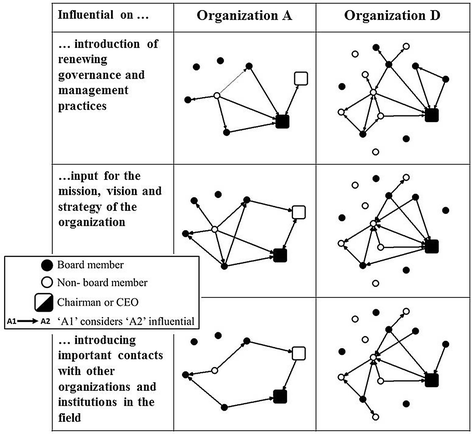
A coalition perspective on nonprofit governance quality: Analyzing dimensions of influence
Abstract: We answer the call that governance research should focus more on processes outside the boundaries of boards, especially for nonprofit organizations. In particular, we suggest and elaborate concrete steps with respect to the advantages of a leadership coalition perspective to focus more on the behavioral and informal aspects of governance. Through a comparative case analysis of five nonprofit organizations, we explore contingencies between characteristics of nonprofit leadership coalitions and governance quality. We identify two dimensions to classify leadership coalitions: centralized versus diffused influence and specific versus holistic influence. These dimensions are subsequently related with observed governance quality. We frame our finding in the existing literature on group faultlines, which are socially constructed dividing lines within groups, and we discuss the importance of establishing a balanced coalition between a weak or nonexisting and a strong dominant coalition to ensure high governance quality. We also present propositions on how governance quality and its various sub-dimensions can be studied as a complex, nonlinear intermediate concept between coalitional aspects of leadership groups and nonprofit organizational performance. Finally, we discuss concrete avenues for further testing and verification of our theoretical interpretation.
Willems, J., Andersson, F.O., Jegers, M., & Renz, D. O. 2017. A coalition perspective on nonprofit governance quality: Analyzing dimensions of influence in an exploratory comparative case analysis. Voluntas: International Journal of Voluntary and Nonprofit Organizations. 28(4): 1422–1447.
 The Consensus Project